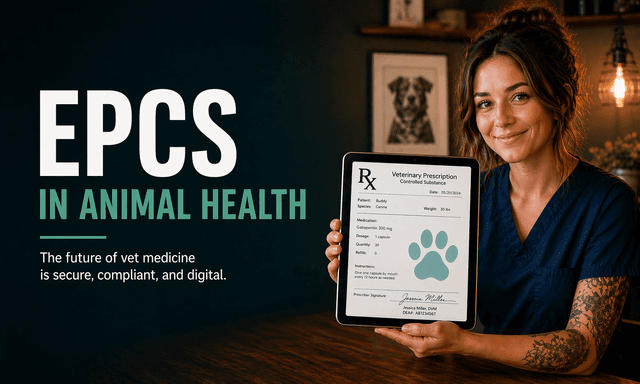
What is EPCS in Animal Health?
Electronic Prescriptions for Controlled Substances (EPCS) is the DEA-certified process that allows veterinarians to securely send prescriptions for controlled medications directly to pharmacies.
In human healthcare, EPCS is mandated by law in most states, helping reduce fraud, improve patient safety, and standardize how controlled substances are prescribed.
In veterinary medicine, that same shift is now beginning.
Why EPCS Matters in Veterinary Medicine
Controlled substances are essential in veterinary care.
From post-surgical pain management to chronic condition treatment, veterinarians rely on these medications every day. But the way prescriptions are handled today is often outdated and inefficient.
- Faxed prescriptions can be lost or delayed
- Phone calls interrupt staff and slow workflows
- Paper scripts introduce compliance and fraud risks
These issues don’t just impact operations—they directly affect patient care.
Delays in prescriptions mean delays in treatment.
Manual processes create risk in a category that requires accuracy and accountability.
EPCS for veterinarians changes that.
By replacing fax, phone, and paper with a secure digital prescribing workflow, veterinary practices gain speed, visibility, and control.
EPCS Mandates in Human Healthcare
EPCS mandates did not happen overnight.
In human healthcare, mandates followed years of investment in:
- Nationwide ePrescribing networks
- Standardized data formats (NCPDP SCRIPT)
- Integration across electronic health records and pharmacies
Once that infrastructure was in place, EPCS mandates became enforceable and widespread.
Today, most states require electronic prescribing for controlled substances, making EPCS the standard for compliance.
Why EPCS Has Not Been Enforced in Veterinary Medicine
A common question is:
Why isn’t EPCS already required for veterinarians?
The answer comes down to infrastructure.
Until recently, animal health lacked:
- A unified network connecting veterinary practices and pharmacies
- A standardized method for transmitting prescription data
- A scalable way to enforce compliance across systems
Because of this, EPCS mandates in veterinary medicine have not been broadly enforced.
In many cases, flexibility or informal exemptions existed—not because compliance wasn’t important, but because it wasn’t feasible.
Without a reliable digital pathway, enforcing EPCS at scale wasn’t realistic.
So the industry relied on:
- Fax
- Phone
- Paper
Not because it worked well—but because it was the only option.
What’s Changing: EPCS in Animal Health Is Now Possible
For the first time, veterinary medicine has the infrastructure needed to support true EPCS workflows.
This marks a major shift.
- Controlled prescriptions can now be sent digitally and securely
- Pharmacies can receive structured, validated data instantly
- Workflows become auditable, compliant, and consistent
As adoption increases, regulatory alignment is expected to follow, just as it did in human healthcare.
VetWay Script Exchange: Enabling EPCS in Veterinary Medicine
VetWay is the first platform in animal health fully DEA-certified for EPCS, built specifically for veterinary workflows.
The VetWay Script Exchange enables:
- Digital prescribing for controlled substances at the point of care
- Secure transmission that meets DEA requirements
- Full compliance through:
- Two-factor authentication
- Identity proofing
- Secure data exchange
- Comprehensive audit trails
By meeting these standards, VetWay provides a compliant, end-to-end solution for veterinary ePrescribing of controlled substances.
Benefits of EPCS for Veterinary Practices and Pharmacies
Security
Reduces fraud, diversion, and prescription errors
Efficiency
Eliminates time spent on manual fax and phone workflows
Compliance
Aligns veterinary medicine with EPCS standards already enforced in human healthcare
Patient Care
Ensures faster, more reliable access to medications
The Future of EPCS in Veterinary Medicine
EPCS mandates transformed human healthcare.
Now, the same conditions that enabled those mandates—
infrastructure, connectivity, and standardized workflows—are emerging in animal health.
As those elements continue to develop, EPCS in veterinary medicine will move from optional to expected.
Final Thoughts
For years, veterinary medicine operated without the infrastructure required for digital prescribing of controlled substances.
That is no longer the case.
EPCS is now possible in animal health—and with that, the industry is entering a new phase of compliance, efficiency, and patient safety.
EPCS mandates reshaped human healthcare.
Animal health is next.
Frequently Asked Questions (FAQ)
What is EPCS in veterinary medicine?
EPCS (Electronic Prescriptions for Controlled Substances) is the DEA-certified digital process that allows veterinarians to securely prescribe controlled medications electronically.
Are veterinarians required to use EPCS?
Not broadly today, but mandates are expected to evolve as infrastructure and regulatory alignment improve.
Why hasn’t EPCS been adopted in animal health before?
Because the infrastructure needed to support secure, compliant digital prescribing did not exist at scale.
How does VetWay support EPCS?
VetWay Script Exchange provides the network and technology required to enable compliant, end-to-end EPCS workflows in veterinary medicine.
What are the benefits of EPCS for veterinary practices?
Improved efficiency, stronger compliance, reduced administrative burden, and faster patient care.